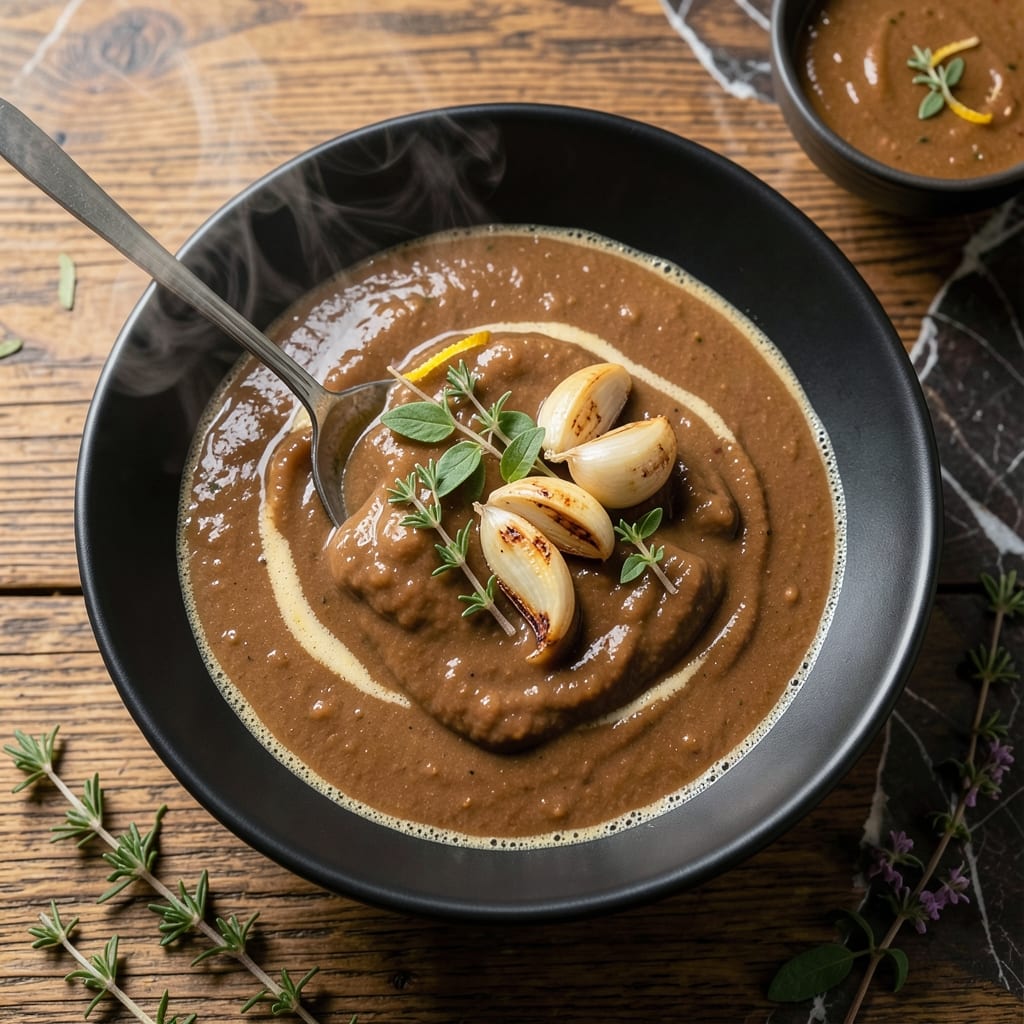
Crafting a rich gravy without gluten requires precision, not compromise. My years at The Smoky Pig taught me that pork drippings hold untapped depth when properly reduced.
This method uses cornstarch or arrowroot to achieve that velvety texture traditional roux-based gravies deliver. The key is patience—letting the pan fond dissolve completely before thickening.
What emerges is a savory sauce with layers of pork essence, perfect for drizzling over roasts or mashed potatoes. The flavor rivals any classic version, with none of the gluten.
Store leftovers for up to four days, or freeze for future use. The consistency remains smooth when reheated gently with a splash of liquid.
Ingredients for Gluten Free Pork Gravy
Ten ingredients transform pork drippings into a velvety, gluten-free sauce with professional depth.
| Ingredient | Amount | Notes |
|---|---|---|
| Pork Drippings 🍖 | 1 cup | From roasted pork, skimmed of fat |
| Cornstarch 🌾 | 2 tbsp | Or arrowroot powder for thickening |
| Cold Water 💧 | ¼ cup | For cornstarch slurry |
| Beef Stock 🥩 | 1 cup | Low-sodium preferred for control |
| Garlic Cloves 🧄 | 2 cloves | Minced for depth of flavor |
| Fresh Thyme Sprigs 🌿 | 2 whole | Stems removed, leaves only |
| Worcestershire Sauce 🫒 | 1 tbsp | Gluten-free variety essential |
| Dijon Mustard 🟡 | 1 tsp | For subtle tang and complexity |
| Kosher Salt 🧂 | ½ tsp | Adjust to taste after reducing |
| Freshly Ground Black Pepper 🌶️ | ½ tsp | Coarsely ground preferred |
The pork drippings are non-negotiable for authentic flavor. Save them from your next roast—they’re liquid gold for gravy. Use low-sodium beef stock to control seasoning precisely. For the cornstarch, Arrowhead Mills or Bob’s Red Mill are reliable brands. Fresh thyme adds brightness that dried simply can’t match, though dried works in a pinch at one-third the quantity.
Need a cornstarch substitute? Arrowroot powder behaves identically. No pork drippings? Bacon fat offers a smoky alternative (ensure it’s gluten-free). The Worcestershire must be gluten-free—Lea & Perrins makes a trusted version. For herb flexibility, rosemary or sage can stand in for thyme, though the flavor profile will shift slightly. Always check labels on all liquid ingredients.
Gravy keeps 4 days refrigerated in an airtight container. For longer storage, freeze in ice cube trays, then transfer to bags for up to 3 months. Reheat gently with a splash of water or stock to restore the smooth consistency. Avoid boiling, which can break the emulsion.
Why You’ll Love This Recipe
- One Pot Wonder: Honestly, I just stir the cornstarch into cold water, dump it in with the pork drippings and beef stock, and let it thicken while I mash potatoes.
- Rich Garlic Depth: That slow-simmered garlic in the pork drippings gives it a savory warmth that beats any store-bought version.
- Sunday Roast Savior: I drizzle this over pork, turkey, or even meatloaf—it’s my secret for making leftovers taste intentional.
- Pantry Stretch: Between us, I use the leftover gravy as a base for stew the next day. Zero waste, all flavor.
Step-by-Step Instructions for Gluten Free Pork Gravy
Master this technique for a velvety, lump-free gravy that elevates any pork dish.
Step 1: Create a Smooth Cornstarch Slurry
In a small bowl, whisk together the 2 tbsp Cornstarch and 0.25 cup Cold Water until completely smooth. This slurry is your thickening agent and must be lump-free before adding to the hot liquid. I always use cold water here—warm water can cause the cornstarch to clump prematurely.
The ratio of cornstarch to water is critical. Too much cornstarch will make the gravy gluey; too little will leave it thin. Whisk vigorously for 30 seconds until the mixture looks like heavy cream. Set this aside while you prepare the base.
Step 2: Build the Flavor Base with Drippings and Aromatics
Place a saucepan over medium heat and add the 1 cup Pork Drippings. Once the drippings are hot but not smoking, add the 2 cloves Garlic Cloves (minced) and 2 whole Fresh Thyme Sprigs (leaves only). Sauté for 1-2 minutes until the garlic is fragrant but not browned.
Here’s the thing—burnt garlic will make your gravy bitter. Keep the heat at medium and stir constantly. The pork drippings should be glossy and the garlic should release its aroma without taking on color. This forms the flavor foundation of your sauce.
Step 3: Deglaze and Incorporate the Slurry
Pour in the 1 cup Beef Stock, 1 tbsp Worcestershire Sauce, 1 tsp Dijon Mustard, 0.5 tsp Kosher Salt, and 0.5 tsp Freshly Ground Black Pepper. Stir to combine and bring the mixture to a gentle simmer. This is where the magic happens—the liquid picks up all the browned bits from the pan, infusing the gravy with depth.
Once simmering, slowly pour in the cornstarch slurry while whisking constantly. This gradual addition prevents clumping and ensures a smooth consistency. Continue whisking for 1-2 minutes until the gravy begins to thicken visibly.
Step 4: Simmer to Perfection
Reduce the heat to low and let the gravy simmer for 5-7 minutes, stirring occasionally. You’ll notice it transforming from a thin liquid to a rich, velvety sauce that coats the back of a spoon. This is the moment that matters: don’t rush it. The longer it simmers, the more the flavors meld together.
The gravy should reach a consistency that’s thick enough to nappe (lightly coat) the back of a spoon but still pourable. If it’s too thick, whisk in a splash of warm beef stock to loosen it. If it’s too thin, mix another 1 tsp Cornstarch with 1 tbsp Cold Water and whisk it in, then simmer for another 2 minutes.
Step 5: Strain and Serve
Remove the saucepan from heat. For an ultra-smooth gravy, strain it through a fine-mesh sieve to remove the thyme leaves and any small lumps. Press down gently on the solids with a spoon to extract as much flavor as possible.
Taste and adjust the seasoning if needed, though the Kosher Salt and Freshly Ground Black Pepper should already provide a balanced profile. Serve immediately while hot, as it will continue to thicken slightly as it cools. This gravy pairs beautifully with roasted pork, mashed potatoes, or biscuits.
Pro Tips For Making Gluten Free Pork Gravy
- Whisk Cornstarch First: Mix cornstarch with cold water before adding to hot drippings—I learned this the hard way after dealing with lumpy gravy more times than I’d like to admit.
- Skim the Drippings: Spoon off excess fat from the pork drippings before making the gravy, or your sauce will taste greasy instead of rich.
- Simmer, Don’t Boil: Keep the gravy at a gentle simmer once thickened; boiling breaks the cornstarch bond and turns it thin again.
- Roast the Garlic: Toss whole garlic cloves into the pork drippings for 2-3 minutes before adding liquid—sounds small, but it adds a deep, nutty flavor that raw garlic just can’t match.
Common Mistakes When Making Great gluten free pork gravy
Lumpy Gravy Disaster
Never add cornstarch directly to hot liquid—it clumps instantly. I learned this the hard way during my first week at The Smoky Pig. Always create a smooth slurry with cold water first, then whisk slowly into the simmering base. This prevents those dreaded lumps. 💡
Burnt Garlic Bitter
Garlic burns in seconds over medium-high heat. Keep it at medium and stir constantly once it hits the pan. Burnt garlic turns your gravy bitter and ruins the entire batch. I pull mine off just as it becomes fragrant, never browned.
Thin Gravy Woes
If your gravy is too thin, don’t keep simmering—it reduces flavor. Instead, mix 1 tsp Cornstarch with 1 tbsp Cold Water and whisk into the hot gravy. Simmer for 2 minutes to activate the thickening power fully.
Over-Salting
Pork drippings and beef stock vary in saltiness. Start with just ½ tsp Kosher Salt, then adjust after reducing. I taste mine three times during the process—it’s the only way to guarantee perfect seasoning.
Breaking the Emulsion
Boiling gravy can cause separation. Keep it at a gentle simmer, never a rolling boil. If it does break, whisk in 1 tsp cold water off heat to bring it back together. Patience is key with this sauce. 🔥
Skipping the Strain
Even with careful whisking, small lumps can form. I always strain through a fine-mesh sieve for that restaurant-quality smoothness. Press the solids gently to extract maximum flavor without letting bits through.
Nutrition Facts
Frequently Asked Questions
Can I use something other than cornstarch?
Yes! Arrowroot powder works identically for thickening. For a grain-free option, try tapioca starch. Each requires the same slurry method with cold water.
How do I fix gravy that’s too thick?
Whisk in warm beef stock 1 tbsp at a time until it reaches your desired consistency. Avoid adding cold liquid, which can cause clumping.
Why does my gravy taste bitter?
Burnt garlic is the likely culprit. Always sauté it at medium heat just until fragrant, never browned. Strain out any burnt bits immediately.
Can I make this ahead of time?
It keeps 4 days refrigerated or 3 months frozen. Reheat gently with a splash of water to restore the smooth texture.

- Ground Pork and Pineapple Recipe: Sweet-Savory Filipino-Style Dish - November 7, 2026
- Grilled Smoked Pork Chops Recipe: Double-Smoked Depth and Juice - November 7, 2026
- Ground Pork Gravy Recipe: Rich and Savory Pan Sauce - November 7, 2026